
There’s something incredibly comforting about a pot of simmering stew packed with tender beef and fresh veggies. This Healthy Gluten-Free Beef Stew Recipe is my go-to when I want a satisfying, wholesome meal that warms you inside out – without any gluten worries. Let me tell you why it’s such a keeper!

Jump to:
Why You'll Love This Recipe
I genuinely love sharing this recipe because it’s approachable but feels special – you get that rich beef stew flavor without relying on anything processed or gluten-filled. Plus, it’s flexible enough for your personal tweaks!
- Gluten-Free Comfort Food: Finally, a hearty stew that’s safe for gluten-sensitive friends and absolutely delicious.
- Simple Ingredients, Big Flavor: The balsamic vinegar and fresh herbs give this stew a depth that keeps me coming back for more.
- Easy to Customize: Add your favorite root veggies or swap out the herbs – it adapts beautifully to season changes.
- Perfect for Meal Prep: It freezes like a dream and tastes better the next day, making weeknight dinners effortless.
Ingredients & Why They Work
Each ingredient here plays its part in building layers of flavor and nourishing heartiness. When shopping, I always pick the freshest veggies I can find and beef that’s well-marbled for tenderness after slow cooking.

- Olive oil or avocado oil: A healthy fat that helps brown the beef beautifully without smoking up the kitchen.
- Kosher salt: Essential for elevating every flavor, so don’t skip or skimp on this.
- Black pepper: Adds a subtle kick and warmth to balance the stew.
- Stew beef: Go for chuck or any well-marbled cut for tender results after simmering.
- Onion: Brings sweetness and aroma that forms the stew’s backbone.
- Carrots: Sweet, earthy, and they hold up well to slow cooking.
- Celery: Adds a subtle crunch and complexity of flavor.
- Yukon gold potatoes: Creamy texture when cooked, perfect for thickening the stew naturally.
- Crushed tomatoes: Imparts acidity and body, balancing the rich beef flavors.
- Balsamic vinegar: A secret ingredient of mine for tanginess and a slight sweetness.
- Garlic: A must-have aromatic to build that cozy aroma we all love.
- Beef broth (bone broth preferred): Deepens the stew’s savory notes and enhances nutrition.
- Fresh rosemary: Brings fragrant, piney hints that elevate the stew’s character.
- Bay leaves: Subtle earthiness and depth during simmering.
- Cornstarch or arrowroot: Helps thicken the stew for that luscious spoonful without gluten.
- Frozen peas: Added at the end for a pop of color and sweet freshness.
- Fresh parsley (optional): Brightens the plate and adds a fresh finish.
Make It Your Way
This Healthy Gluten-Free Beef Stew Recipe truly welcomes your personal touch. Over the years, I’ve swapped veggies depending on what’s fresh or what I have on hand, so don’t hesitate to adjust to your taste or pantry.
- Variation: One time, I added parsnips and a handful of mushrooms for even deeper earthiness. It was a game changer for fall dinners!
- Dietary twist: For a lower-carb option, try cutting back potatoes and adding more celery or cauliflower florets.
- Slow cooker adaptation: I’ve adapted this recipe for the slow cooker too – just brown the beef and veggies first, then cook low and slow for 6-8 hours.
Step-by-Step: How I Make Healthy Gluten-Free Beef Stew Recipe

Step 1: Brown Your Beef to Unlock Flavor
Start by heating your oil over medium-high heat in a sturdy Dutch oven or heavy pot. Don't overcrowd the pan—adding beef cubes in batches is crucial so they brown nicely instead of steaming. Season lightly with salt and pepper. I find that browning for about 3-4 minutes per side creates that beautiful crust that makes the stew taste rich and meaty. Once browned, set the beef aside on a clean plate; this step adds so much depth to your stew!
Step 2: Sauté the Vegetables to Build Base Layers
In the same pot, toss in diced onion, carrots, celery, and potatoes. Sprinkle the remaining salt and pepper over the veggies, then stir well while scraping up those tasty browned bits left behind by the beef—it’s flavor magic in the making. Allow the veggies to cook 4-5 minutes until they start softening; this step helps release their natural sweetness and melds the stew’s overall flavor.
Step 3: Add Tomatoes, Vinegar & Garlic for That Tangy Kick
Next, stir in the crushed tomatoes, balsamic vinegar, and minced garlic. This combo gives the stew its distinct, slightly tangy and fragrant touch that balances the richness of the beef perfectly. Take a moment here to mix everything well so the flavors start marrying.
Step 4: Combine Beef, Broth & Herbs for Long Simmer
Return the browned beef cubes to the pot along with any juices—don’t waste those! Pour in the beef broth to cover everything, then tuck in rosemary sprigs and bay leaves. Bring the pot to a simmer, reduce heat to medium-low, and let it bubble away gently for 1 ½ to 2 hours. Stir occasionally and add a splash of water if the stew gets too thick or starts to stick. This slow cooking makes the beef melt-in-your-mouth tender, which is truly the star of the show.
Step 5: Thicken and Finish with Peas
When your beef is fork-tender and the flavors are beautifully developed, remove the bay leaves and rosemary stems. Whisk cornstarch or arrowroot with half a cup of water until smooth, then stir it into the simmering stew. Cook for another 2-3 minutes until it thickens to your liking. Finally, stir in frozen peas—they only need a minute or two to heat through, giving a sweet pop and vibrant color.
Top Tip
I’ve learned through making this stew probably a dozen times that patience really pays off here. A slow simmer and proper browning elevate this stew beyond ordinary. These tips have saved me from common pitfalls:
- Don’t Rush Browning: Taking your time browning beef in batches locks in flavor and keeps it juicy.
- Scrape the Pan: Always deglaze by scraping up browned bits when sautéing veggies – it’s pure flavor gold.
- Check Consistency Before Thickening: If your stew gets too thick during cooking, add a splash of broth or water before adding the cornstarch slurry.
- Final Seasoning Adjustments: After thickening, taste and tweak salt and pepper – flavors deepen as it cooks, so trust your palate.
How to Serve Healthy Gluten-Free Beef Stew Recipe

Garnishes
I often sprinkle fresh chopped parsley right before serving – it adds a pop of color and a crisp, herbal brightness that contrasts the stew’s hearty richness. Sometimes, I like a few twists of fresh black pepper on top for a little bite.
Side Dishes
Though this beef stew is a meal all on its own, I love pairing it with gluten-free crusty bread or a simple mixed green salad to keep things light and fresh. Mashed cauliflower also pairs nicely if you want something creamy without extra carbs.
Creative Ways to Present
For special occasions, I’ve served this stew in rustic bread bowls to add a cozy, charming touch. Ladling it over polenta or creamy mashed potatoes creates a rich, elegant presentation that's perfect for guests.
Make Ahead and Storage
Storing Leftovers
I keep leftover Healthy Gluten-Free Beef Stew Recipe in airtight containers in the fridge, and it stays delicious for up to 3-4 days. The flavors actually deepen overnight, so it’s perfect for next-day lunches.
Freezing
Freezing works wonderfully, too. I portion the stew into freezer-safe containers and it keeps for up to 2 months. When thawing, I transfer it to the fridge overnight then reheat gently on the stovetop.
Reheating
To reheat, warm over low medium heat, stirring occasionally to prevent sticking. If the stew’s too thick after refrigeration, add a splash of broth or water to loosen it up and maintain that perfect spoonable texture.
Frequently Asked Questions:
Absolutely! Just brown your beef and sauté the veggies first, then transfer everything to the slow cooker and cook on low for 6-8 hours until tender. Add peas and thickener near the end.
Arrowroot powder is a great gluten-free alternative that works similarly to thicken the stew without altering the flavor. Just mix with water before adding to the pot.
The beef should be fork-tender and easily shredded or broken apart. This usually takes about 1 ½ to 2 hours of gentle simmering, depending on your beef cut.
Yes! In fact, the flavors deepen if you make it a day ahead. Just store it in the fridge and gently reheat when ready to serve.
Final Thoughts
This Healthy Gluten-Free Beef Stew Recipe has become a labor of love in my kitchen. It’s the kind of dish that brings people together, fills the house with warmth, and leaves you feeling nourished. I hope you enjoy making it as much as I do—and that it becomes a comforting favorite in your home too.
Print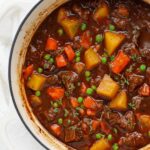
Healthy Gluten-Free Beef Stew Recipe
- Prep Time: 20 minutes
- Cook Time: 2 hours
- Total Time: 2 hours 20 minutes
- Yield: 10 cups
- Category: Main Course
- Method: Stovetop
- Cuisine: American
- Diet: Gluten Free
Description
This gluten-free beef stew is a cozy, hearty, and delicious meal perfect for any occasion. Made with tender beef, fresh vegetables, and a flavorful broth thickened with a cornstarch slurry, it is simple to prepare on the stovetop and perfect for a comforting dinner.
Ingredients
Main Ingredients
- 1 tablespoon olive oil or avocado oil
- 1 teaspoon kosher salt
- ½ teaspoon black pepper
- 1 ½ pounds stew beef, cut into 1-inch cubes
- 1 medium onion, diced (about 2 cups)
- 2 cups sliced carrots, cut into ½-inch pieces (5-6 carrots)
- 1 cup sliced celery (about 3 stalks)
- 1-1 ½ pounds Yukon gold potatoes, cut into 1-inch cubes
- 1 (15 oz.) can crushed tomatoes
- ⅓ cup balsamic vinegar
- 1-2 cloves garlic, minced
- 4 cups beef broth (bone broth preferred)
- 1-2 sprigs fresh rosemary
- 2 bay leaves
- 2-3 tablespoons cornstarch or arrowroot (use 3 for thicker stew)
- ½ cup water
- 1 cup frozen peas
- Optional: fresh parsley, for garnish
Instructions
- Brown the Beef: Heat the oil in a large Dutch oven or soup pot over medium-high heat. Working in batches, add beef cubes, season with salt and pepper, and cook 3-4 minutes per side until browned but still pink in the center. Remove to a plate.
- Sauté Vegetables: Add onion, carrots, celery, and potatoes to the pot with remaining salt and pepper. Stir and scrape the browned bits from the pan. Cook vegetables 4-5 minutes until starting to soften.
- Add Tomatoes and Aromatics: Stir in crushed tomatoes, balsamic vinegar, and minced garlic, mixing well with the softened vegetables.
- Combine Beef and Broth: Return the browned beef and any juices to the pot. Pour in the beef broth and stir to combine.
- Simmer Stew: Add rosemary sprigs and bay leaves. Bring to a simmer over medium heat, then reduce to medium-low. Simmer uncovered for 1 ½ to 2 hours, stirring occasionally, until beef is very tender and can be shredded. Add water if the stew gets too thick.
- Thicken the Stew: Remove bay leaves and rosemary stems. In a small bowl, whisk cornstarch with ½ cup water until smooth. Stir slurry into the stew and cook 2-3 minutes until thickened. Adjust seasoning as desired.
- Finish and Serve: Turn off heat and stir in frozen peas. Let them heat through for 1-2 minutes. Serve warm, optionally garnished with fresh parsley. Store leftovers in an airtight container in the fridge for 3-4 days or freeze up to 2 months.
Notes
- This stew can also be made in the oven or slow cooker for convenience.
- For a thicker stew, use 3 tablespoons of cornstarch instead of 2.
- Substitute arrowroot powder for cornstarch for a paleo-friendly option.
- Use bone broth for added depth of flavor and nutrition.
- Adding fresh parsley at the end brightens the flavors and adds color.
- If stew thickens too much upon standing, reheat with a splash of broth or water.
Nutrition
- Serving Size: 1 cup stew
- Calories: 175 kcal
- Sugar: 6.5 g
- Sodium: 403 mg
- Fat: 4.7 g
- Saturated Fat: 1.5 g
- Unsaturated Fat: 3.2 g
- Trans Fat: 0 g
- Carbohydrates: 13.8 g
- Fiber: 2.9 g
- Protein: 19.9 g
- Cholesterol: 42 mg





Leave a Reply